
KLOW BLEND
KLOW BLEND
Couldn't load pickup availability
KLOW BLEND
Get it as soon as -
30 Day Trial
30 Day Trial
We're confident you'll be happy with your order! In case things don't go as planned, you have 30 days to request a refund based on our return and refund policy.
Shipping & Processing
Shipping & Processing
Our shipping services are designed to be fast and reliable, ensuring your order is delivered promptly. Please allow 5-10 business days for delivery.
Track My Order
Track My Order
Once your order is shipped, we will provide you with a tracking number to monitor the progress of your shipment on our website or the shipping carrier's website. You can track your order here Track My Order
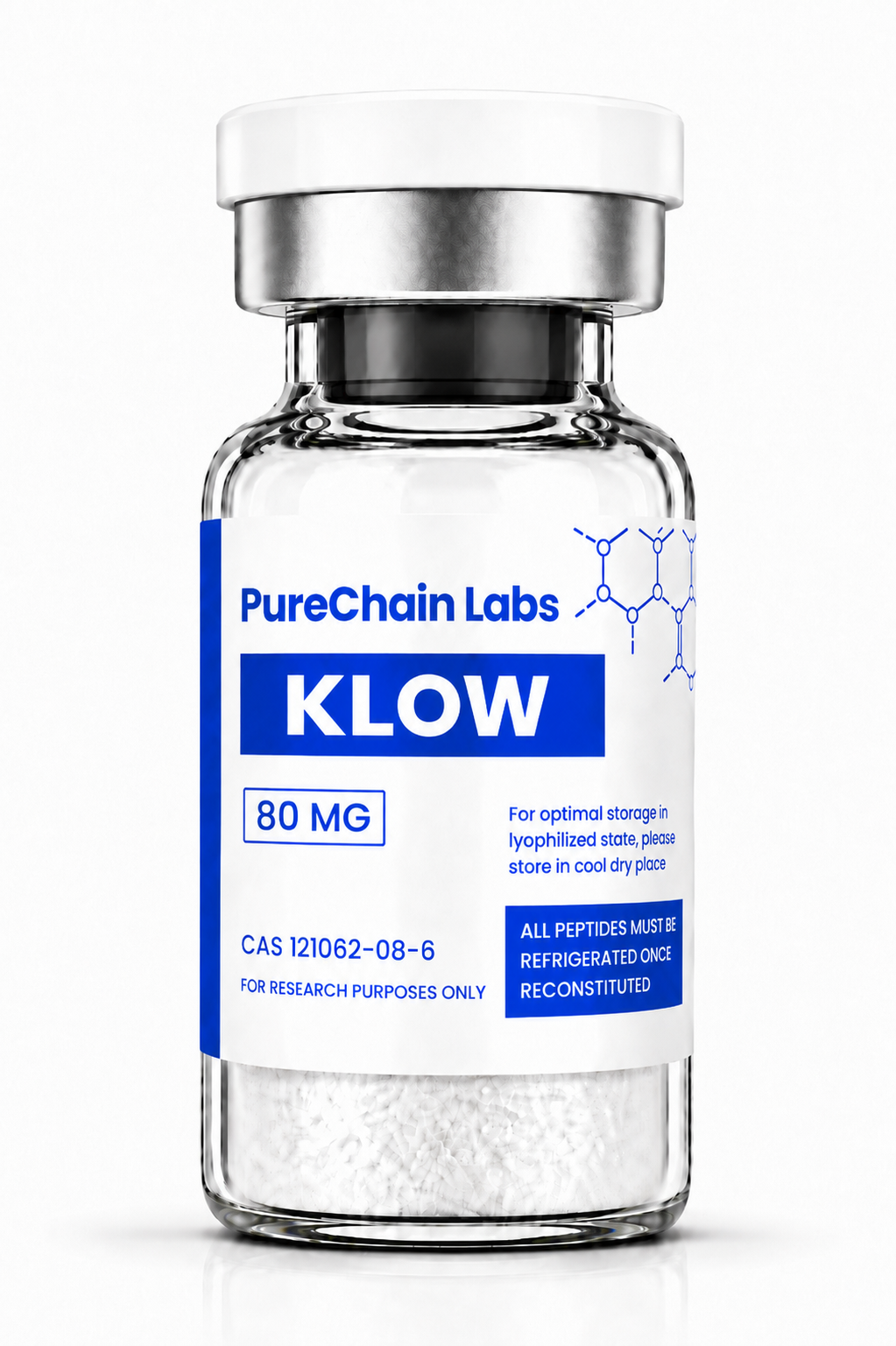
Each vial contains a blend of highly pure BPC-157, TB-500, KPV, and GHK-Cu.
KLOW is a proprietary research blend combining four synergistic peptides—BPC-157, TB-500, KPV, and GHK-Cu—designed for advanced laboratory investigation into immune modulation, inflammation control, tissue repair, and cellular signaling. By combining these compounds, the KLOW blend offers researchers a unique opportunity to explore multi-pathway interactions not available from single-peptide studies.
📦 Easy Returns
Use Code SAVE10
📦 Easy Returns
Use Code SAVE10
📦 Easy Returns
Use Code SAVE10
📦 Easy Returns
Use Code SAVE10
📦 Easy Returns
Use Code SAVE10
📦 Easy Returns
Use Code SAVE10
📦 Easy Returns
Use Code SAVE10
📦 Easy Returns
Use Code SAVE10
📦 Easy Returns
Use Code SAVE10
📦 Easy Returns
Use Code SAVE10
📦 Easy Returns
Use Code SAVE10
📦 Easy Returns
Use Code SAVE10
📦 Easy Returns
Use Code SAVE10
📦 Easy Returns
Use Code SAVE10
📦 Easy Returns
Use Code SAVE10
📦 Easy Returns
Use Code SAVE10